Half your "deficiency"
is actually the heat.
"ขาดธาตุ" ครึ่งหนึ่ง
จริง ๆ คือ ร้อน
Một nửa "thiếu chất"
thực ra là nhiệt.
Leaf taco, interveinal yellowing, drooping at lights-on — how to tell when the problem isn't in the feed, and the one bottle that makes the plant survive a 38°C room. ใบม้วน เหลืองระหว่างเส้น ใบตกตอนเปิดไฟ — วิธีรู้เมื่อปัญหาไม่ได้อยู่ในปุ๋ย และขวดเดียวที่ทำให้ต้นรอดห้อง 38°C Lá taco, vàng giữa gân, rũ khi bật đèn — cách biết vấn đề không phải ở dinh dưỡng, và chai duy nhất giúp cây sống sót phòng 38°C.
In a 38°C Thai grow room, half the "deficiency" symptoms a grower sees are actually heat stress. More nutrients make it worse. Mills Vitalize delivers bioavailable silicon that hardens cell walls against the heat. If you could only buy one bottle in the Mills line, make it this one. ในห้องปลูกไทย 38°C อาการ "ขาดธาตุ" ครึ่งหนึ่งที่ผู้ปลูกเห็นจริง ๆ คือเครียดจากร้อน ธาตุเพิ่มทำให้แย่ลง Mills Vitalize ส่งซิลิกอนที่พืชใช้ได้ ทำให้ผนังเซลล์แข็งต้านร้อน ถ้าซื้อขวดเดียวได้จากไลน์ Mills ให้เลือกขวดนี้ Trong phòng Thái 38°C, một nửa triệu chứng "thiếu" người trồng thấy thực ra là stress nhiệt. Thêm dinh dưỡng làm tệ hơn. Mills Vitalize cung silicon sinh khả dụng làm cứng thành tế bào chống nóng. Nếu chỉ mua một chai dòng Mills, chọn chai này.
Every serious Thai grower has been through this cycle. You walk into the room at 2pm. Canopy is drooping. New growth looks pale between the veins. A couple of the bigger fan leaves are taco-ing at the edges. You pull up your feed chart, check your EC, and start second-guessing your nutrients. You add more nitrogen. You swap bases. You read forum threads until 1am. The pattern comes back the next afternoon anyway.
It isn't the nutrients. It's the heat.
What heat stress actually looks like
The symptoms look identical to deficiencies from the top of the canopy:
- Leaf taco — edges curl upward. Looks like magnesium deficiency. Really: the plant is trying to reduce surface area exposed to hot air.
- Interveinal yellowing — yellow patches between green veins. Looks like iron or zinc. Really: stomatal closure has starved the chloroplasts of CO₂, so chlorophyll production stalls.
- Drooping fan leaves at lights-on — they pick up again by end of lights-off. Looks like root problems or over-watering. Really: transpiration demand outpaces xylem flow when the tank is too warm.
- Brittle, papery new growth — leaves seem thinner than they should be. Looks like calcium. Really: cell walls didn't lay down enough silica before expansion.
- Stretched internodes — the plant looks leggy. Looks like light burn compensation. Really: heat shock triggers auxin redistribution and the plant grows vertical.
You can't tell the two apart from the leaf alone. The diagnostic isn't the symptom — it's canopy temperature at the moment the symptom shows up.
The 28°C rule
Mills HQ calibrates every feed chart around Dutch climate: 22–25°C tank temperature, 26–28°C canopy, 60% relative humidity. Under those conditions, a healthy plant transpires, uptakes, and holds internal water balance without strain.
The moment you cross 28°C canopy temperature, stomatal conductance starts closing. By 32°C, the plant has shut most of its stomata to conserve water. Closed stomata means no CO₂ uptake, no evaporative cooling, and calcium transport — which depends on the transpiration stream — grinds to a stop. Your plant is now fighting four simultaneous failures:
You can't fix any of this from the feed tank alone. The water is already there. The nutrients are already there. The plant's own cellular architecture is what decides whether it survives the heat.
Why more nutrients make it worse
When Thai growers see these symptoms and reach for stronger feed, they push EC from 1.6 up to 2.0 or higher. The logic: more food, more uptake, more plant. The chemistry: higher EC means higher osmotic pressure in the rhizosphere, which makes it harder for roots to pull water from the medium. In a hot room where the plant is already water-stressed, you've just doubled the water-stress signal.
Result: canopy droops harder. Tip burn accelerates. The symptom you were trying to fix gets worse within 24 hours. Most growers interpret this as "the new formula is working — the plant is purging old damage" and double down. This is the moment the cycle goes badly wrong.
ผู้ปลูกไทยจริงจังทุกคนผ่านวงจรนี้มาแล้ว คุณเข้าห้องตอนบ่าย 2 ยอดใบตก ใบใหม่ดูซีดระหว่างเส้น ใบพัดใหญ่สองสามใบม้วนที่ขอบ คุณเปิดตารางสูตร ตรวจ EC แล้วเริ่มสงสัยปุ๋ย เพิ่มไนโตรเจน เปลี่ยนฐาน อ่านกระทู้ถึงตีหนึ่ง รูปแบบก็กลับมาบ่ายวันถัดไปอยู่ดี
ไม่ใช่ปุ๋ย คือร้อน
อาการร้อนจริง ๆ เป็นยังไง
อาการดูเหมือนขาดธาตุเป๊ะจากยอดใบ:
- ใบม้วนเหมือนทาโก้ — ขอบม้วนขึ้น ดูเหมือนขาดแมกนีเซียม จริง ๆ: พืชกำลังลดพื้นผิวที่โดนอากาศร้อน
- เหลืองระหว่างเส้น — ดูเหมือนขาดเหล็กหรือสังกะสี จริง ๆ: ปากใบปิด คลอโรพลาสต์ขาด CO₂ การสร้างคลอโรฟิลหยุด
- ใบพัดตกตอนเปิดไฟ — กลับตอนปิดไฟ ดูเหมือนปัญหาราก จริง ๆ: คายน้ำเกินการไหลของไซเลมเมื่อถังร้อน
- ใบใหม่เปราะบาง เหมือนกระดาษ — ดูเหมือนขาดแคลเซียม จริง ๆ: ผนังเซลล์ไม่ได้สะสมซิลิกาพอก่อนขยาย
- ข้อยืด — ต้นดู "ยาวเกิน" ดูเหมือน light burn จริง ๆ: heat shock ทำให้ auxin กระจาย พืชยืดแนวตั้ง
แยกจากใบเปล่าไม่ได้ การวินิจฉัยไม่ใช่อาการ — คือ อุณหภูมิ canopy ตอนที่อาการปรากฏ
กฎ 28°C
Mills HQ ปรับตารางสูตรทั้งหมดรอบสภาพดัตช์: อุณหภูมิถัง 22–25°C ยอดใบ 26–28°C ความชื้น 60% ในสภาพนั้น พืชสมบูรณ์คายน้ำ ดูดซึม รักษาสมดุลน้ำภายในโดยไม่เครียด
ทันทีที่ข้าม 28°C ที่ยอดใบ ปากใบเริ่มปิด ที่ 32°C พืชปิดปากใบเกือบหมดเพื่อรักษาน้ำ ปากใบปิดหมายถึงไม่รับ CO₂ ไม่เย็นด้วยการระเหย และการขนส่งแคลเซียม — ซึ่งอาศัยกระแสคายน้ำ — หยุด พืชของคุณต่อสู้กับสี่ความล้มเหลวพร้อมกัน:
แก้จากถังเดียวไม่ได้ น้ำอยู่แล้ว ปุ๋ยอยู่แล้ว โครงสร้างเซลล์ของพืชเองคือสิ่งที่ตัดสินว่ารอดร้อนหรือไม่
ทำไมปุ๋ยเพิ่มทำให้แย่ลง
เมื่อผู้ปลูกไทยเห็นอาการเหล่านี้แล้วเพิ่มปุ๋ย ดัน EC จาก 1.6 เป็น 2.0 หรือสูงกว่า เหตุผล: อาหารมาก ดูดซึมมาก ต้นใหญ่ เคมี: EC สูงหมายถึงแรงดันออสโมติกใน rhizosphere สูง ทำให้รากดึงน้ำจากวัสดุปลูก ยากขึ้น ในห้องร้อนที่พืชเครียดน้ำอยู่แล้ว คุณเพิ่งเพิ่มสัญญาณเครียดน้ำเป็นสองเท่า
ผลลัพธ์: ยอดใบตกหนักขึ้น ไหม้ปลายเร็วขึ้น อาการที่คุณพยายามแก้แย่ลงใน 24 ชม. ผู้ปลูกส่วนใหญ่ตีความว่า "สูตรใหม่ได้ผล — พืชกำลังกำจัดความเสียหายเก่า" แล้วเพิ่มอีก นี่คือจุดที่วงจรผิดทาง
Mọi người trồng Thái nghiêm túc đều trải qua vòng lặp này. Bạn vào phòng lúc 2 giờ chiều. Tán rũ. Chồi mới trông tái giữa gân. Vài lá quạt to taco ở mép. Bạn mở lịch bón, kiểm EC, nghi ngờ dinh dưỡng. Thêm nitơ. Đổi nền. Đọc diễn đàn đến 1 giờ sáng. Mẫu lại xuất hiện chiều hôm sau.
Không phải dinh dưỡng. Là nhiệt.
Stress nhiệt thực sự trông thế nào
Triệu chứng giống hệt thiếu hụt từ tán trên:
- Lá taco — mép cong lên. Trông như thiếu magiê. Thực: cây giảm diện tích tiếp xúc không khí nóng.
- Vàng giữa gân — trông như thiếu sắt/kẽm. Thực: khí khổng đóng, lục lạp thiếu CO₂, tổng hợp diệp lục ngưng.
- Lá quạt rũ khi bật đèn — hồi khi tắt đèn. Trông như rễ. Thực: thoát hơi vượt dòng xylem khi bồn nóng.
- Chồi mới giòn như giấy — trông như thiếu canxi. Thực: thành tế bào chưa đủ silica trước khi nở.
- Lóng vươn — trông "gầy". Trông như bù đèn. Thực: sốc nhiệt kích auxin, cây vươn thẳng.
Không thể phân biệt từ lá đơn. Chẩn đoán không phải triệu chứng — là nhiệt độ tán lúc triệu chứng xuất hiện.
Quy tắc 28°C
Mills HQ hiệu chuẩn mọi lịch bón theo khí hậu Hà Lan: bồn 22–25°C, tán 26–28°C, ẩm 60%. Trong đó, cây khỏe thoát hơi, hấp thụ, giữ cân bằng nước không căng.
Khi vượt 28°C tại tán, khí khổng bắt đầu đóng. Đến 32°C, cây đóng hầu hết khí khổng để giữ nước. Đóng khí khổng = không CO₂, không làm mát bốc hơi, vận chuyển canxi — phụ thuộc dòng thoát hơi — dừng. Cây đang chiến với bốn thất bại đồng thời:
Không sửa được từ bồn đơn thuần. Nước sẵn. Dinh dưỡng sẵn. Kiến trúc tế bào của cây quyết định sống sót nhiệt hay không.
Vì sao thêm dinh dưỡng làm tệ hơn
Khi người Thái thấy triệu chứng rồi tăng ăn, đẩy EC từ 1.6 lên 2.0+. Lý luận: nhiều ăn, hấp thụ nhiều, cây to. Hóa học: EC cao = áp suất thẩm thấu cao ở rễ, rễ khó kéo nước hơn. Trong phòng nóng cây đã stress nước, bạn vừa nhân đôi tín hiệu stress nước.
Kết quả: tán rũ nặng hơn. Cháy đầu nhanh hơn. Triệu chứng bạn định sửa tệ hơn trong 24 giờ. Hầu hết người trồng diễn giải "công thức mới hoạt động — cây đang thải tổn thương cũ" và tăng gấp đôi. Đây là lúc vòng lặp đi sai hướng.
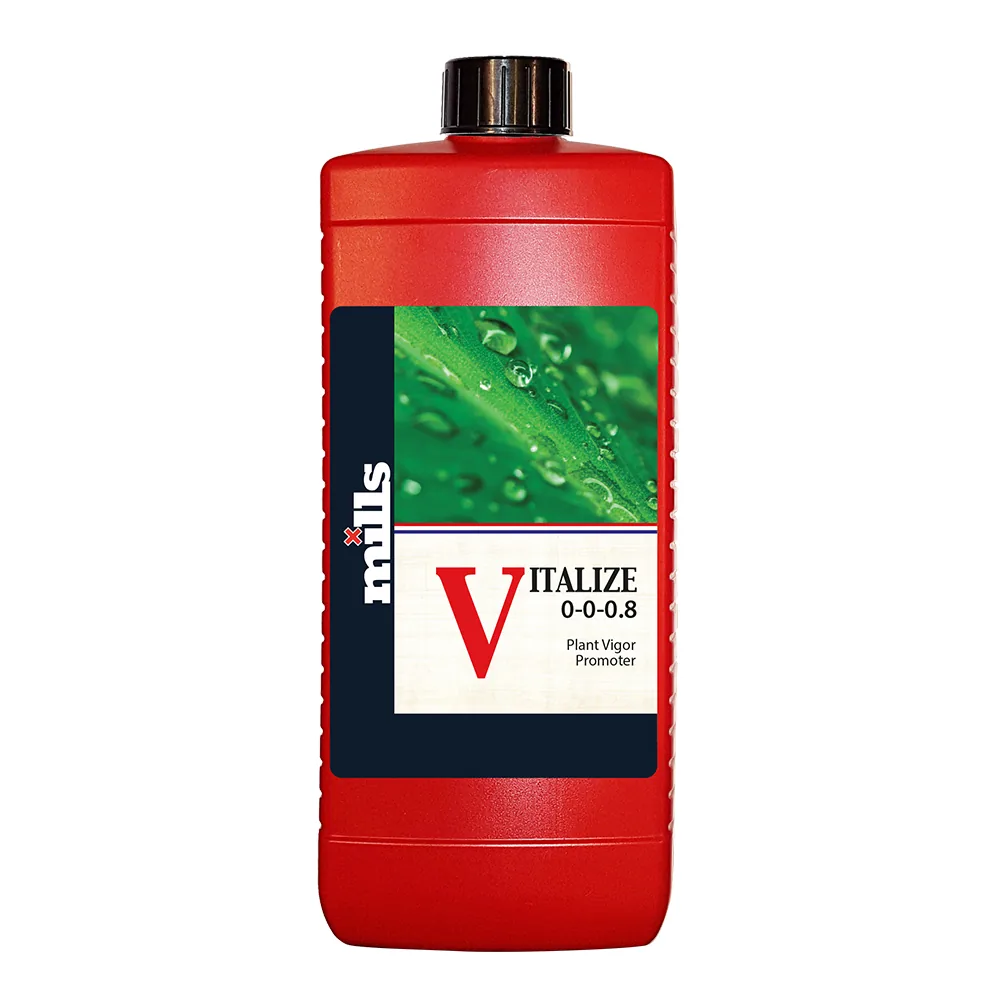
Mills Nutrients · Netherlands Mills Nutrients · เนเธอร์แลนด์ Mills Nutrients · Hà Lan
Vitalize Vitalize Vitalize
If you could only buy one bottle from the Mills line in Thailand, make it this one. Vitalize delivers mono-silicic acid — the single most bioavailable form of silicon on the market. The plant deposits it into cell walls as silica, creating a crystalline lattice that hardens leaves against heat, resists mildew, supports calcium transport, and keeps stems upright through peak flower weight. Every Thai grower who runs Vitalize for one cycle keeps it for every cycle after. This is the bottle that does more than you paid for. ถ้าซื้อได้ขวดเดียวจากไลน์ Mills ในไทย ให้เลือกขวดนี้ Vitalize ส่งกรดโมโนซิลิซิก — รูปซิลิกอนที่พืชใช้ได้ดีที่สุดในตลาด พืชสะสมเป็นซิลิกาในผนังเซลล์ สร้างตาข่ายผลึกที่ทำให้ใบแข็งต้านร้อน ต้านเชื้อรา ช่วยขนส่งแคลเซียม และทำให้ต้นตั้งตรงตอนดอกหนักสุด ผู้ปลูกไทยทุกคนที่ใช้ Vitalize หนึ่งรอบ เก็บไว้ใช้ทุกรอบหลังจากนั้น นี่คือขวดที่ทำงานมากกว่าที่จ่าย Nếu chỉ được mua một chai dòng Mills ở Thái, chọn chai này. Vitalize cung axit mono-silicic — dạng silicon sinh khả dụng nhất thị trường. Cây lắng thành silica trong thành tế bào, tạo lưới tinh thể cứng lá chống nóng, chống mốc, hỗ trợ vận chuyển canxi, giữ thân đứng qua đỉnh trọng lượng hoa. Mọi người trồng Thái chạy Vitalize một vụ giữ mãi. Đây là chai làm hơn bạn trả.
The 60-second diagnostic
Next time you see a pattern that looks like deficiency, do this before touching the feed chart:
- Infrared thermometer the canopy. Not the air — the leaf surface, pointed at multiple canopy spots. A ฿800 IR gun will tell you more in 30 seconds than any leaf tissue test. Target: < 28°C.
- Check when the symptom appears. Does it show up 2–4 hours into lights-on? Heat. Does it show up progressively across multiple days? Deficiency.
- Check if it reverses overnight. Heat stress symptoms — especially leaf taco and droop — visibly pull back within the first 2 hours of lights-off. Deficiencies do not.
- Check canopy symmetry. Heat hits the whole canopy at once. Deficiencies start in one area — usually the bottom (mobile) or top (immobile) — and spread.
If three of four answers point to heat, stop changing the feed. Fix the environment, and add the one bottle that makes the plant handle what the environment can't change.
Why Vitalize works when a fan doesn't
The silica lattice
Mono-silicic acid is uptaken via passive transport in the transpiration stream. Once inside the plant, it polymerises into silica and is deposited in cell walls — particularly in leaf epidermis and stem cortex. This deposit creates a crystalline armour around each cell. Crystalline-armoured cells lose less water, close stomata more precisely, and survive temperature spikes without the cellular collapse that causes droop.
Not a cooling product — a hardening product
Vitalize doesn't cool the plant. It doesn't shade the plant. It doesn't lower the tank temperature. What it does is make the plant's own tissue able to handle the heat it's already getting. This is why growers who run aircon AND Vitalize see compounding benefit — the aircon reduces incoming heat; the Vitalize raises the plant's ceiling for heat it can tolerate.
Dosing discipline
Silica deposition is a 72-hour cycle per new leaf. That means Vitalize has to be in the tank every feed from day one of veg to the end of stretch. Skipped feeds create silica-poor leaf generations that remain vulnerable until they cycle out. Dose 0.2 ml/L every single feed — this is the one additive where "every feed" actually means every feed.
Before a heat spike
The Thai commercial calendar has two predictable heat spike windows: April (pre-monsoon) and October (end of monsoon, low humidity + high solar). Check the 10-day forecast. If your ambient is forecast to hit 36°C+ at any point, double the Vitalize to 0.4 ml/L starting 48 hours before the spike. Reactive dosing does not work for silicon — it's a structural material, not a metabolic one.
What you see when it's working
First sign: the afternoon droop at 2pm disappears. The plant holds upright even at peak light. Next: leaf taco doesn't appear at all on new growth. Fan leaves stay flat. Within one full cycle, the brittle-paper new growth stops appearing — new leaves come in thicker, darker, and rigid. Stems can hold heavier bloom weight without staking.
Thai commercial growers who switch to Vitalize typically report a 10–20% yield bump on the first cycle, not because the plant is "fed better" but because it's running at its actual genetic potential instead of fighting daily heat stress. The EC you're already dosing is now being uptaken instead of wasted on stress response.
วินิจฉัยใน 60 วินาที
ครั้งต่อไปที่เห็นรูปแบบเหมือนขาดธาตุ ทำแบบนี้ก่อนแตะตารางสูตร:
- ใช้เทอร์โมมิเตอร์อินฟราเรดวัดยอดใบ ไม่ใช่อากาศ — ผิวใบ เล็งหลายจุด ปืน IR ราคา ฿800 บอกได้ใน 30 วินาที มากกว่าตรวจเนื้อเยื่อใบ เป้า: < 28°C
- ตรวจเวลาที่อาการปรากฏ ปรากฏ 2–4 ชม. หลังเปิดไฟ? ร้อน ปรากฏค่อยเป็นค่อยไปหลายวัน? ขาดธาตุ
- ตรวจว่ากลับภายในคืน อาการร้อน — โดยเฉพาะใบม้วนและตก — ลดใน 2 ชม. แรกของปิดไฟ ขาดธาตุไม่กลับ
- ตรวจความสมมาตร ร้อนโจมตีทั้งยอดพร้อมกัน ขาดธาตุเริ่มที่จุดเดียว — ปกติล่าง (เคลื่อนที่) หรือบน (ไม่เคลื่อนที่) — แล้วลาม
ถ้า 3 ใน 4 ชี้ที่ร้อน หยุดเปลี่ยนสูตร แก้สิ่งแวดล้อม และเพิ่มขวดเดียวที่ทำให้พืชจัดการสิ่งที่สิ่งแวดล้อมเปลี่ยนไม่ได้
ทำไม Vitalize ได้ผลเมื่อพัดลมไม่ได้ผล
ตาข่ายซิลิกา
กรดโมโนซิลิซิกเข้าพืชผ่านการขนส่งแบบพาสซีฟในกระแสคายน้ำ เมื่อเข้าไปแล้ว พอลิเมอร์ไรซ์เป็นซิลิกาและสะสมในผนังเซลล์ — โดยเฉพาะผิวใบและคอร์เท็กซ์ลำต้น นี่สร้างเกราะผลึกรอบแต่ละเซลล์ เซลล์ที่มีเกราะผลึกเสียน้ำน้อยลง ปิดปากใบแม่นขึ้น และรอดจากคลื่นความร้อนโดยไม่ล้ม
ไม่ใช่เย็น — คือแข็ง
Vitalize ไม่ทำให้พืชเย็น ไม่บังแสง ไม่ลดอุณหภูมิถัง ที่มันทำคือทำให้เนื้อเยื่อของพืชรับความร้อนที่มีอยู่ได้ นี่คือเหตุผลที่ผู้ปลูกที่ใช้แอร์ + Vitalize ได้ผลทวีคูณ — แอร์ลดความร้อนเข้า Vitalize ยกเพดานความร้อนที่พืชทน
วินัยการโดส
การสะสมซิลิกาเป็นรอบ 72 ชม. ต่อใบใหม่ หมายถึง Vitalize ต้องอยู่ในถัง ทุกรอบ จากวันที่ 1 ของ veg ถึงจบ stretch รอบที่ข้ามสร้างรุ่นใบที่ขาดซิลิกาและเปราะจนกว่าใบจะหมุนออก โดส 0.2 มล./ล ทุกรอบ — นี่คือตัวเสริมเดียวที่ "ทุกรอบ" หมายถึงทุกรอบจริง ๆ
ก่อนคลื่นความร้อน
ปฏิทินเชิงพาณิชย์ไทยมีสองช่วงคลื่นความร้อนที่คาดการณ์ได้: เมษายน (ก่อนมรสุม) และตุลาคม (ปลายมรสุม ชื้นต่ำ + แสงแดดสูง) ตรวจพยากรณ์ 10 วัน ถ้าอากาศจะแตะ 36°C+ เพิ่ม Vitalize เป็น 0.4 มล./ล เริ่ม 48 ชม. ก่อน โดสตอบสนองไม่ได้ผลสำหรับซิลิกอน — เป็นวัสดุโครงสร้าง ไม่ใช่เมตาบอลิก
ที่คุณเห็นเมื่อมันทำงาน
สัญญาณแรก: ยอดใบตกช่วงบ่าย 2 หาย พืชตั้งตรงแม้แสงสูงสุด ต่อไป: ใบม้วนไม่ปรากฏบนใบใหม่ ใบพัดแบนเรียบ ภายในรอบเต็มหนึ่งรอบ ใบใหม่เปราะเหมือนกระดาษหยุดปรากฏ — ใบใหม่หนาขึ้น เข้มขึ้น แข็งขึ้น ลำต้นรับน้ำหนักดอกหนักได้โดยไม่ต้องค้ำ
ผู้ปลูกไทยที่เปลี่ยนมาใช้ Vitalize รายงานผลผลิตเพิ่ม 10–20% ในรอบแรก ไม่ใช่เพราะพืช "กินดีขึ้น" แต่เพราะรันที่ศักยภาพพันธุกรรมจริงแทนที่จะสู้ความเครียดร้อนรายวัน EC ที่คุณใส่อยู่แล้วถูกดูดซึมแทนที่จะเสียไปกับการตอบสนองความเครียด
Chẩn đoán 60 giây
Lần tới thấy mẫu giống thiếu, làm điều này trước khi động lịch bón:
- Nhiệt kế hồng ngoại tán. Không phải không khí — bề mặt lá, nhiều điểm. Súng IR ฿800 bảo bạn trong 30 giây hơn test mô. Mục tiêu: < 28°C.
- Kiểm khi triệu chứng xuất hiện. 2–4 giờ sau bật đèn? Nhiệt. Dần dần qua nhiều ngày? Thiếu.
- Kiểm có hồi qua đêm. Stress nhiệt — đặc biệt taco và rũ — giảm trong 2 giờ đầu tắt đèn. Thiếu thì không.
- Kiểm đối xứng tán. Nhiệt đánh cả tán cùng lúc. Thiếu bắt đầu một vùng — thường dưới (di động) hoặc trên (bất động) — rồi lan.
Nếu 3/4 chỉ về nhiệt, dừng đổi công thức. Sửa môi trường, thêm chai duy nhất làm cây xử lý được điều môi trường không đổi.
Vì sao Vitalize hoạt động khi quạt không
Lưới silica
Axit mono-silicic hấp thụ qua vận chuyển thụ động trong dòng thoát hơi. Vào cây, nó polymer hóa thành silica và lắng trong thành tế bào — đặc biệt biểu bì lá và vỏ thân. Tạo giáp tinh thể quanh mỗi tế bào. Tế bào giáp tinh thể mất nước ít hơn, đóng khí khổng chính xác hơn, sống sót sốc nhiệt không sụp tế bào gây rũ.
Không phải làm mát — làm cứng
Vitalize không làm cây mát. Không che. Không giảm nhiệt bồn. Nó làm mô cây xử lý được nhiệt đang có. Đây là vì sao người trồng dùng máy lạnh + Vitalize thấy lợi ích cộng hưởng — máy lạnh giảm nhiệt vào; Vitalize nâng trần nhiệt cây chịu được.
Kỷ luật liều
Lắng silica chu kỳ 72 giờ mỗi lá mới. Nghĩa là Vitalize phải trong bồn mỗi lần bón từ ngày 1 veg đến hết stretch. Bỏ lỡ tạo thế hệ lá nghèo silica dễ tổn thương đến khi chu kỳ ra. Bón 0.2 ml/L mỗi lần — đây là phụ gia duy nhất "mỗi lần" thực sự là mỗi lần.
Trước sốc nhiệt
Lịch thương mại Thái có hai cửa sổ sốc nhiệt đoán được: tháng 4 (trước mưa) và tháng 10 (cuối mưa, ẩm thấp + nắng cao). Kiểm dự báo 10 ngày. Nếu ambient sẽ chạm 36°C+, tăng Vitalize lên 0.4 ml/L bắt đầu 48 giờ trước. Liều phản ứng không hoạt động với silicon — là vật liệu cấu trúc, không chuyển hóa.
Bạn thấy gì khi nó hoạt động
Dấu hiệu đầu: rũ chiều 2 giờ biến mất. Cây đứng thẳng kể cả đỉnh ánh sáng. Tiếp: taco không xuất hiện trên chồi mới. Lá quạt phẳng. Trong một chu kỳ đầy đủ, chồi giòn như giấy ngừng xuất hiện — lá mới ra dày hơn, đậm hơn, cứng hơn. Thân chịu trọng lượng hoa nặng không cần cọc.
Người trồng thương mại Thái chuyển Vitalize báo tăng năng suất 10–20% vụ đầu, không phải "ăn tốt hơn" mà vì chạy đúng tiềm năng di truyền thay vì đấu stress nhiệt hàng ngày. EC bạn đang bón được hấp thụ thay vì lãng phí cho phản ứng stress.
Questions growers ask after reading this คำถามที่ผู้ปลูกถามหลังอ่าน Câu hỏi sau khi đọc bài này
-
How do I know if it's heat stress or a nutrient deficiency?รู้ได้ยังไงว่าร้อนหรือขาดธาตุ?Sao biết là nhiệt hay thiếu?
Check canopy temperature before anything else. If leaf surface is above 32°C, heat is the primary cause. Heat shows up symmetrically across the canopy, appears within hours of peak light, and fades overnight. True deficiency is asymmetric, progressive, and doesn't reverse overnight. ตรวจอุณหภูมิยอดใบก่อนทุกอย่าง ถ้าผิวใบเกิน 32°C ร้อนคือสาเหตุหลัก ร้อนแสดงแบบสมมาตร เกิดไม่กี่ชม. หลังแสงสูง และหายคืนเดียว ขาดธาตุจริงไม่สมมาตร ค่อยเป็นค่อยไป ไม่กลับคืนเดียว Kiểm nhiệt tán trước tiên. Bề mặt lá trên 32°C, nhiệt là nguyên nhân chính. Nhiệt đối xứng, xuất hiện vài giờ sau đỉnh sáng, mờ qua đêm. Thiếu thật bất đối xứng, tiến triển, không hồi qua đêm.
-
Why does Vitalize help with heat when it's not a cooling product?ทำไม Vitalize ช่วยร้อนทั้งที่ไม่ใช่ตัวเย็น?Vì sao Vitalize giúp nhiệt dù không phải sản phẩm làm mát?
Vitalize delivers bioavailable silicon, which the plant deposits in its cell walls as silica. Silica-hardened leaves hold water better, close stomata more efficiently, and resist temperature spikes without wilting. You aren't cooling the plant — you're making it able to survive the heat it's already getting. Vitalize ส่งซิลิกอนที่พืชใช้ได้ พืชสะสมเป็นซิลิกาในผนังเซลล์ ใบที่แข็งด้วยซิลิการักษาน้ำดีขึ้น ปิดปากใบดีขึ้น ต้านคลื่นความร้อนไม่เหี่ยว ไม่ใช่เย็น — คือทำให้รอดร้อนที่มี Vitalize cung silicon sinh khả dụng, cây lắng silica trong thành tế bào. Lá cứng silica giữ nước tốt, đóng khí khổng hiệu quả, chống sốc nhiệt không héo. Không làm mát — làm sống sót nhiệt đang có.
-
Can I dose Vitalize every feed?ใส่ Vitalize ทุกรอบได้ไหม?Bón Vitalize mỗi lần được không?
Yes — and you should. Vitalize is the one bottle we recommend dosing on every single feed from week one of veg to week two of flower. 0.2 ml/L per feed during normal weather, doubled to 0.4 ml/L for 48 hours around a forecast heat spike. ใช่ — และควร Vitalize เป็นขวดเดียวที่เราแนะนำให้ใส่ทุกรอบจากสัปดาห์ 1 veg ถึงสัปดาห์ 2 ดอก 0.2 มล./ล ปกติ เพิ่มเป็น 0.4 มล./ล 48 ชม. รอบคลื่นความร้อน Có — và nên. Vitalize là chai duy nhất chúng tôi khuyên bón mỗi lần từ tuần 1 veg đến tuần 2 hoa. 0.2 ml/L thường, gấp đôi 0.4 ml/L 48 giờ quanh sóng nhiệt dự báo.
-
If I could only use one Mills bottle in Thailand, which would it be?ถ้าใช้ขวดเดียวจาก Mills ในไทยได้ จะเป็นอะไร?Nếu chỉ dùng một chai Mills ở Thái, là chai nào?
Vitalize. Every Thai grower who runs Vitalize for one full cycle keeps it permanently. It protects against heat, monsoon mildew, calcium transport failure, and brittle stems. No other single additive in the Mills line has that many use cases. It's the magic bottle. Vitalize ผู้ปลูกไทยทุกคนที่ใช้ Vitalize หนึ่งรอบเต็ม เก็บไว้ตลอด ป้องกันร้อน เชื้อรามรสุม ล้มเหลวการขนส่งแคลเซียม และลำต้นเปราะ ไม่มีตัวเสริมอื่นในไลน์ Mills ที่มีกรณีใช้เยอะขนาดนี้ คือขวดเด็ด Vitalize. Mọi người trồng Thái chạy Vitalize một chu kỳ đầy đủ giữ mãi. Bảo vệ nhiệt, mốc mùa mưa, hỏng vận chuyển canxi, thân giòn. Không phụ gia Mills nào có nhiều trường hợp dùng vậy. Chai thần kỳ.
Monsoon-season mildew: the silicon defence Thai growers miss เชื้อราในมรสุม: ซิลิกอนป้องกันที่ผู้ปลูกไทยพลาด Mốc mùa mưa: phòng vệ silicon người trồng Thái bỏ qua
Tip burn: calcium, heat, or EC? How to diagnose in one feed. ใบไหม้ปลาย: แคลเซียม ร้อน หรือ EC? วินิจฉัยในรอบเดียว Cháy đầu: canxi, nhiệt, hay EC? Chẩn đoán trong một lần bón.